Black White Geometric Floral Seamless Review
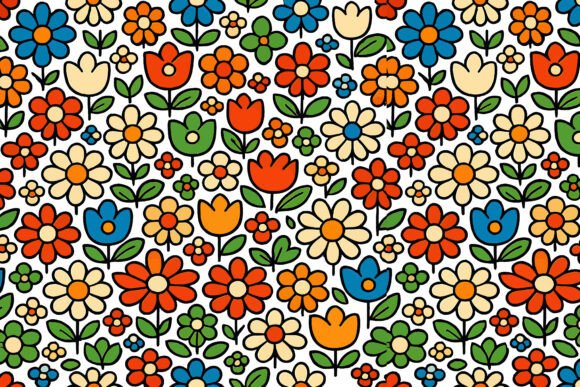
As a designer who spends more time staring at stitch density charts and fabric swatches than sleeping, I have learned to trust my gut before I ever load a file into the machine. When I first pulled up Black White Geometric Floral Seamless, my initial reaction was a mix of curiosity and caution. The description promises a "bright and cheerful retro floral seamless pattern" inspired by the 60s and 70s, featuring bold, playful flowers in vibrant colors. On paper, it sounds like a crowd-pleaser. In practice, however, every design has a personality that reveals itself only after it hits the hoop. This review breaks down how this specific graphics asset performs when translated from a digital screen to a tangible, stitched handmade product.
The First Impression: Retro Vibes Meet Modern Geometry
The moment you see the preview, the aesthetic is undeniable. It taps directly into that nostalgic mid-century modern wave that has been dominating fashion and home decor for years. The interplay between the organic shapes of the flowers and the rigid lines of the geometric background creates a visual tension that is both energetic and structured. For an Etsy seller or a small shop owner, this kind of immediate visual recognition is gold. It stops the scroll.
However, as a reviewer, I look past the pretty picture. I look at the layout. A seamless pattern implies repetition, which means we are dealing with a tileable graphic rather than a single centered motif. This changes everything about how we approach the embroidery process. Unlike a standalone machine embroidery design where you place a logo on a chest pocket, this requires a different mindset. We are looking at coverage, rhythm, and how the eye moves across the surface. The "bold" nature of the flowers suggests high contrast, which is excellent for visibility but can become visually noisy if not balanced correctly against the base material.
Real-World Application: From Screen to Stitch
Let’s imagine a real scenario. You are preparing a batch of custom tote bags for an upcoming craft fair. You want something that screams "summer festival" but still feels sophisticated enough for a boutique client. You decide to use Black White Geometric Floral Seamless as the primary print area on a natural canvas tote.
In this context, the design shines. The vibrant colors mentioned in the description—assuming they translate well through thread choices—will pop against the neutral canvas. The retro theme resonates strongly with the demographic that buys handmade goods. However, because this is a seamless pattern, you cannot simply embroider one flower. You must either digitize a large fill area (which increases hooping time and thread consumption) or use the design as a reference for a printed transfer that is then embroidered over with a simple outline. If you attempt to stitch the entire seamless grid, you risk creating a heavy, stiff fabric that loses its drape. For a tote bag design, lightness is key. If the stitch density is too high, the bag becomes unwieldy.
Consider another angle: baby clothes. The description mentions this is perfect for kids. Soft bodysuits or muslin blankets are great candidates. Here, the "cheerful" aspect takes precedence. The playful flowers can be scaled down slightly to fit smaller hoop sizes. But here is where the caution begins. Tiny details in a busy pattern can get lost in the stitching process, especially on stretchy knit fabrics common in baby apparel. The edges of the flowers might blur if the satin stitch quality isn't top-tier, turning a crisp geometric shape into a muddy blob.
Where to Exercise Caution
No design is universal, and Black White Geometric Floral Seamless has specific limitations that every embroidery designer should respect. First, avoid using this on curved surfaces like baseball caps or beanies unless you are highly experienced. A seamless flat pattern does not conform well to the curvature of a cap without significant distortion during hooping. The geometric lines will warp, breaking the illusion of the pattern and making the final product look amateurish.
Second, be wary of dark fabrics. While the description highlights "vibrant colors," achieving true vibrancy on black or navy cotton requires a high thread count and potentially a white underlay or backing stabilizer. Without proper stabilization, the threads may sink into the fabric, losing their sheen and color intensity. Furthermore, thin fabrics like silk or lightweight rayon are risky. The weight of the embroidery, combined with the potential need for cut-away stabilizers to support a dense pattern, can pucker delicate materials. Always test on scrap fabric first.
Another critical point is the scale of detail. If the original graphic contains tiny negative space elements or very fine lines, these may not survive the digitizing process intact. Running stitches meant to define small petals can break or tangle if the thread colors do not provide enough contrast against each other. I recommend inspecting the design in black and white mockups to ensure the shapes remain distinct even without color.
Impact on Product Value and Brand Consistency
When you sell a finished product, you are selling an experience. A well-executed embroidery project builds customer trust. If the Black White Geometric Floral Seamless pattern is stitched cleanly, with consistent tension and no visible stabilizer peeking out, it signals professionalism. It tells the buyer that attention was paid to detail. Conversely, if the pattern looks stretched or the threads are frayed, it undermines the perceived value of the item.
For commercial embroidery projects, consistency is king. Using a seamless pattern allows for uniform branding across multiple items, such as a set of kitchen towels or a line of aprons. The retro style also adds a layer of storytelling. Customers love knowing the inspiration behind a design. Marketing your products as "inspired by 60s vintage style" gives them a narrative hook that pure abstract patterns lack. This enhances buyer engagement and can justify a higher price point for your custom apparel.
Practical Notes for the Designer
Before committing this embroidery file to production, follow these steps:
- Test Stitch Density: Ensure the design is not overly dense. High density saves time but uses excessive thread and stresses the fabric. Look for open areas where the fabric texture can show through.
- Check Hoop Size: Verify that the largest dimension of your intended placement fits within standard hoop sizes. Seamless patterns often require larger hoops, which can limit your placement options on garments.
- Stabilizer Selection: Use the appropriate stabilizer for your fabric type. Cut-away for knits, tear-away for wovens. Improper stabilization is the number one cause of puckering.
- Licensing Check: Since this is categorized under Freebies and Graphics, you must verify the license terms. Does the free download allow for commercial use? Can you sell finished items made from this design? Never assume; read the fine print to protect your crafter business.
- Thread Contrast: Choose threads that complement the geometric background. If the background is black, bright neon threads will work well. If it is white, deeper jewel tones will provide better definition.
In conclusion, Black White Geometric Floral Seamless is a strong contender for designers looking to add a touch of retro flair to their collections. It offers high visual appeal and broad market relevance. However, its success depends entirely on execution. By respecting the technical limitations of embroidery and planning your production workflow carefully, you can transform this digital graphic into a stunning, profitable handmade product that stands out in a crowded marketplace.