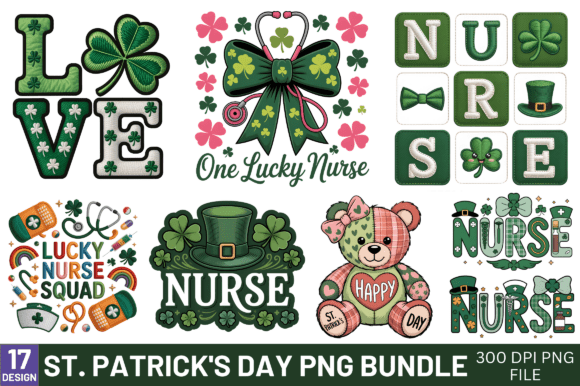
St. Patrick s Day Sublimation PNG Design
As a designer who spends more time looking at stitch density charts than actual holiday decorations, I approach every new asset with a mix of hope and skepticism. When I first pulled up the St. Patrick s Day Sublimation PNG Design, my initial reaction was practical: does this translate well from a flat digital screen to three-dimensional fabric? We all know that what looks crisp on a monitor often gets lost in the thread pool or distorts when pulled tight by machine tension. This review is not just about aesthetics; it is about whether this design holds up under the stress of real-world production for small business owners, Etsy sellers, and serious crafters.
First Impressions and Visual Personality
The moment you load this file, the mood is immediately festive but restrained. Unlike some St. Patrick’s Day graphics that rely on chaotic patterns or overly complex clipart, this design leans into clarity. It feels like it belongs in a modern boutique rather than a discount bin. The visual personality is clean, which is exactly what we need for high-end custom apparel. For an embroidery project, simplicity is often the hardest thing to achieve because it requires perfect execution. If the lines are too thin, they disappear. If they are too thick, they become bulky. This design seems to strike a balance that suggests it was made with vector precision in mind before being converted to a raster format.
For those of us creating handmade products, the "vibe" matters as much as the technical specs. Customers can sense when a design feels generic versus when it feels curated. This PNG carries a weight of professionalism. It doesn’t scream for attention; it invites it. That subtle confidence is crucial for brand consistency if you are building a recognizable shop identity around seasonal collections.
Real-World Application: The Tote Bag Scenario
Let’s imagine a specific use case. You are preparing inventory for a local craft fair in early March. You have decided to create a line of tote bag designs featuring St. Patrick’s Day motifs. You want something that appeals to both the hardcore fan of the holiday and the casual shopper who just likes green accents. You choose a heavy canvas tote and decide to embroider the center chest area.
This is where the St. Patrick s Day Sublimation PNG Design proves its worth. Because it is provided as a high-quality PNG, you have the flexibility to scale it without immediate pixelation issues during your initial mockup phase. However, as any experienced embroiderer knows, the PNG is just the blueprint. The real test is how it stitches. In this scenario, the design likely features distinct shapes that can be handled with either satin stitch outlines or fill stitch blocks. If the design includes text, the legibility is paramount. A blurred or jagged font on a tote bag signals low quality to the buyer. This design appears to maintain sharp edges, suggesting that when digitized correctly, the lettering will remain crisp even after multiple washes—a key concern for customers buying functional items.
Technical Performance in Embroidery
When evaluating an embroidery file derived from a graphic like this, we look at several critical factors. First is the stitch density. A dense fill stitch can make a garment stiff and uncomfortable, especially on a sweatshirt or baby item. If this design relies heavily on large solid areas of color, you must ensure your digitizing software allows for proper underlay and reduced density settings to keep the fabric drape natural. Conversely, if the design is more linear, relying on running stitch or detailed satin work, it may require a higher hoop stability to prevent puckering.
The thread colors you choose will dramatically alter the final impact. While the PNG shows a specific palette, embroidery threads have a texture and sheen that digital files lack. A matte cotton thread might soften the look, making it feel more rustic and handmade, while a polyester rayon thread will make the greens pop with a vibrant, almost neon intensity. For a small shop product, testing different thread brands against this design is essential. You might find that a darker shamrock green reads better on black fabric than a bright lime green, changing the entire aesthetic from playful to sophisticated.
Where Caution Is Required
Not every surface is created equal. There are specific situations where you should pause and re-evaluate using this design. If you are working with textured fabrics like chunky knits or boucle, fine details in the design may get swallowed up by the weave. Similarly, on stretchy fabric such as jersey or spandex blends, the pull of the thread can distort the shape unless you use a strong tear-away or cut-away stabilizer. Dark fabrics present another challenge; if the design has light-colored elements, you may need to add a white backing layer or choose lighter threads to ensure contrast, otherwise, the design will look muddy and indistinct.
Additionally, consider the hoop size. If you are attempting to embroider this on a curved surface like a cap brim or a sleeve cuff, the curvature can stretch the image unevenly. Always do a test run on scrap fabric that matches the thickness and stretch of your final material. This is non-negotiable for maintaining customer trust. A distorted logo or misaligned motif is the fastest way to generate returns and negative reviews.
Impact on Product Value and Buyer Engagement
In the world of Etsy listings and online marketplaces, presentation is everything. Using a high-resolution source like this 300 DPI PNG allows you to create stunning printable mockups for your digital previews. Even though the final product is embroidered, showing a crisp, clear digital representation helps buyers visualize the end result. It reduces purchase anxiety. When a buyer sees a sharp, well-defined design on your listing, they assume the physical product will match that clarity. This directly affects buyer engagement and conversion rates.
Furthermore, the versatility of this design supports a wide range of personalized gifts. It works beautifully for aprons for home cooks, pillow covers for nursery decor, or even embroidered patches for denim jackets. The theme is universally recognized, which aids in recognition and impulse buys during the holiday season. However, remember that holiday embroidery trends move fast. Having a clean, adaptable design allows you to pivot quickly if consumer tastes shift toward minimalism or maximalism.
Practical Designer Notes for Execution
Before you commit to a full production run, follow these steps to ensure success:
- Test on Scrap Fabric: Never skip this step. Observe how the fabric texture interacts with the stitch pattern.
- Check Thread Contrast: Hold your chosen threads up to the screen version of the design to see if the colors translate accurately.
- Review Stitch Density: Ensure the digitized file isn’t over-packed, which can cause needle breaks or thread snags.
- Confirm Hoop Size: Verify that your machine can accommodate the design dimensions without hitting the hoop limits.
- Inspect Small Details: Zoom in on tiny elements. Can they be stitched cleanly, or do they need to be simplified?
- Black and White Mockup: View your design in grayscale to check for value contrast between different colored sections.
- Licensing Check: Crucially, confirm the license terms. Are you allowed to sell the finished physical items? Can you sell digital downloads of the embroidery file itself? Most sublimation PNGs are intended for print-on-demand or physical goods, but commercial rights vary.
Ultimately, the St. Patrick s Day Sublimation PNG Design offers a solid foundation for a successful seasonal collection. It provides the visual clarity needed for professional results and the thematic appeal required for sales. By approaching it with technical diligence—respecting the limitations of fabric and thread—you can transform this digital asset into a tangible, profitable finished product that resonates with customers. It is a tool, and like any good tool, its value depends entirely on the skill and care of the user. Treat it with respect, test it thoroughly, and it will serve your craft business well.